About Skin Cancer
The vast majority of skin cancers fall under below three large categories.
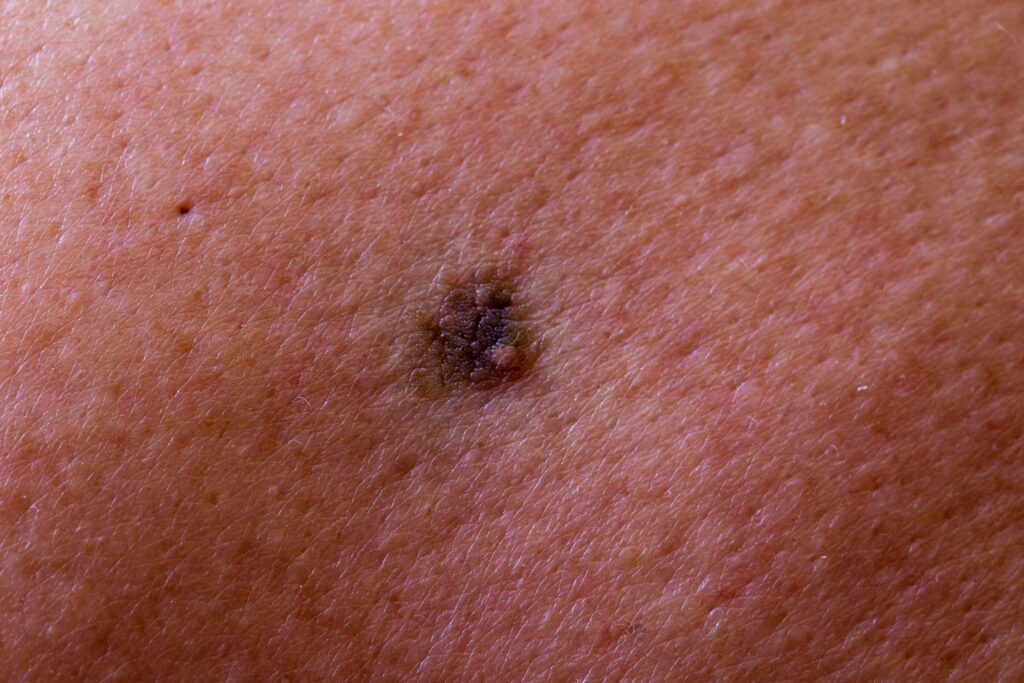
Malignant Melanoma (MM)
One of the least common but most dangerous skin cancers
- Melanomas can grow fast and quick. If untreated they can metastasise to other parts of the body and can become life-threatening in as little as few weeks.
- They can also appear on areas of skin not normally exposed to the sun. They are usually painless, flat, brown/black with an uneven outline but sometimes can also look like a regular, raised, itchy or painful.
- They may be blotchy with more than one colour – brown, black, blue, red, grey or combination of any of these colours. However, some melanomas are pink or skin coloured.
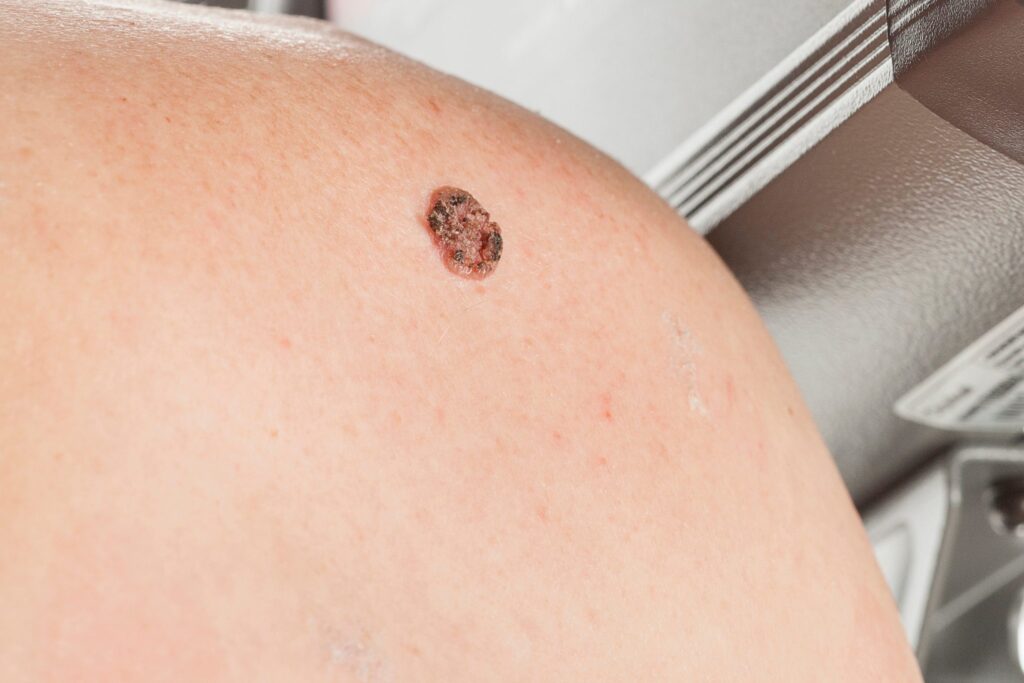
Squamous Cell Cancer (SCC)
Second most common skin cancer and usually less dangerous than melanoma unless they are of certain subtypes growing over head and neck areas.
- It grows over few weeks to months and appears on skin more often exposed to the sun.
- It can be a crusty, thickened, red, scaly spot/nodule that is usually itchy and painful.
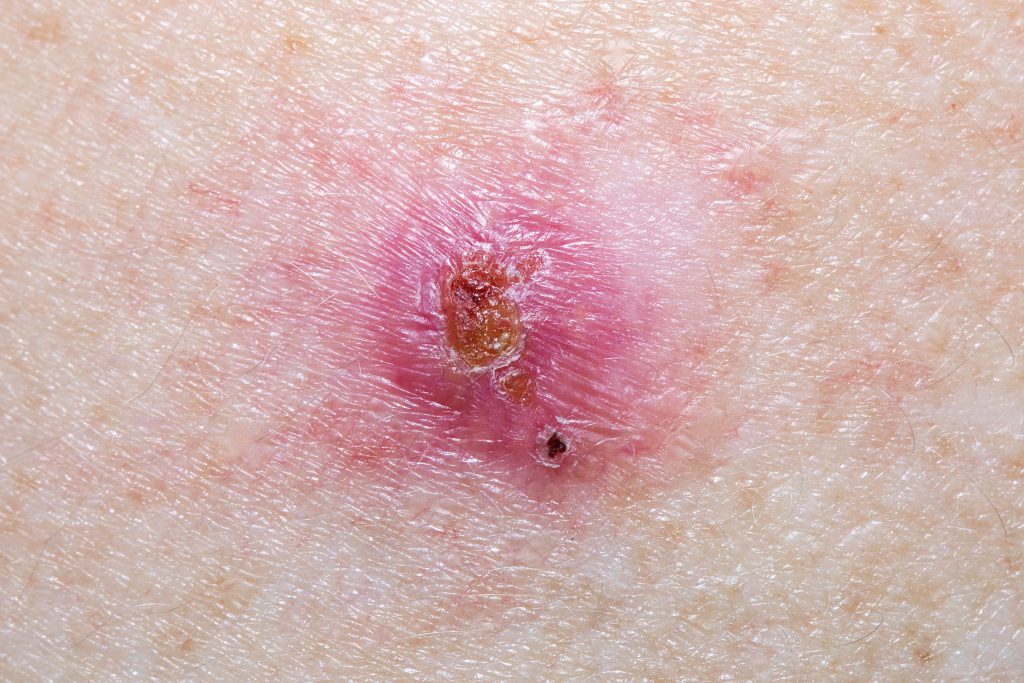
Basal Cell Cancer (BCC)
This is the most common but least dangerous form of skin cancer.
- It grows slowly, usually over the face, scalp, neck, and upper torso.
- They usually grow as smooth painless pink nodules that easily bleed or irregular pink non healing patches.
- As they grow, they may ulcerate or appear like a sore that fail to completely heal or one that does heal but then breaks down again.
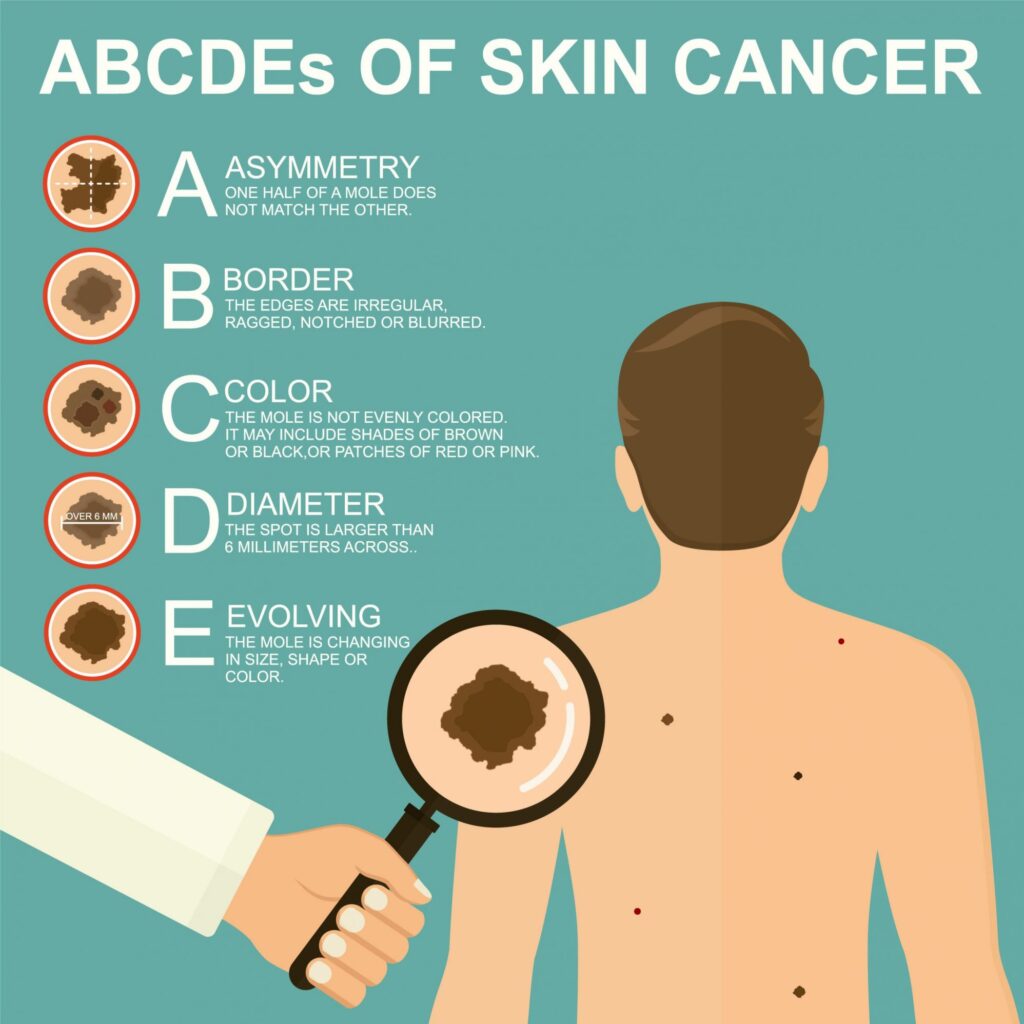
ABCDEs of Skin Cancer
Use ABCDEFG to look for melanoma
Any question? Let's get in touch!
Submit your queries through contact us form to get connected with one of our friendly staffs.